








Now, more than ever, employees crave financial empowerment, and they’re turning to their employers to make it happen. Employees want access to trustworthy, reliable resources that fuel their journey toward financial wellbeing. Workplace financial wellness benefits are no longer a perk; they’re a must-have. By offering programs that include financial education, savings plans, and educational assistance, companies can attract and retain top talent, boost employee morale, and unlock a workforce that’s financially secure and ready to thrive.
Inflation is still top of mind for employees. According to PwC’s 2026 Employee Financial Wellness Survey, 57 percent of full-time employees said finances are their top life stressor. 59% say they are worried about their finances right now, with 56% saying it impacts their productivity at work, and 39% saying it impacts their attendance. Easing the effects of inflation and providing flexible benefits that relieve the financial stress of your people is mission-critical.
Ditch workplace stress, ignite financial wellbeing, and engage your team—all without HR headaches. In this article, we’ll discuss how you can transform your workplace benefits strategy to support employees’ financial wellness.
Here’s what we’ll cover:
- Why should employers care about financial wellness programs for employees?
- What are financial wellness benefits?
- Financial wellness in the workplace: Benefits employees want most
- Why financial wellness programs are a must-have employee benefit
- How to implement an effective financial wellbeing program financial wellness benefits strategy
- Level up your wellness benefits strategy
Why should employers care about financial wellness programs for employees?
A robust employee financial wellness strategy distinguishes your organization in today’s competitive talent market. HR leaders understand the power of customizable benefits to boost employee wellbeing, build equitable and inclusive workplace cultures, and bolster financial security for employees. It’s a win-win: happier, healthier people powering your success!
Financial stress drains energy and impacts both mental and physical health. Empowering your employees with financial wellness programs tackles this head-on, leading to a healthier, happier, and more motivated workforce.
Discover: 6 Strategies to Prevent Burnout and Support Employee Mental Health
Engaged and informed employees are more likely to contribute positively to the workplace. Investing in their financial health shows you care, building trust and a collaborative spirit. Bank of America’s 12th annual Workplace Benefits Report found that 80% of employers believe offering financial wellness support results in more satisfied, loyal, engaged, and productive employees.
Read On: 6 Proven Ways to Boost Your Employee Wellbeing Program
What are financial wellness benefits?
Financial wellness benefits create a supportive workplace environment that prioritizes employee financial health. These benefits help employees effectively navigate their financial lives and include financial education and coaching, lifestyle benefits, pre-tax savings accounts, and tuition and student loan support.
Financial education and financial planning are foundational to financial wellbeing. Employees across generations say they want financial advisors and wealth management professionals not tied to financial products or a company retirement plan. To help employees understand and evaluate financial options and make well-informed decisions, you need trustworthy, objective advisors. From setting personal finance goals, financial wellness checkups, one-on-one coaching, and financial education seminars, personal financial advisors can help employees with investments, retirement savings, taxes, and estate planning.
Go beyond traditional healthcare and retirement plans and empower your team with resources to master their money, from budget hacks to smart saving tips. When employees feel more in control of their financial situation, it positively impacts their overall wellbeing.
Successful financial wellness programs often offer a range of benefits and resources, allowing employees to choose what works best for their individual needs.
Financial wellness in the workplace: Benefits employees want most
For some, discussing financial wellbeing at work is a difficult subject to broach. Instead, employers must take a proactive approach—supporting financial wellness before employees feel the sting of troubling finances. Engage for Success finds that financial stress does not just influence mental health, but also physical health. High blood pressure, weaker immune systems, and heart disease appear more commonly in those distracted by their financial security. But with comprehensive financial wellness benefits, employers can respond with benefits that matter, assisting with:
High cost of living
The high cost of living is squeezing employee finances, making it harder to meet basic needs and save for the future. Rising prices for essentials like housing, food, and transportation reduce purchasing power, while increased debt burdens and difficulty saving further exacerbate financial instability. Inflation erodes wages, making it even more challenging for employees to maintain financial security.
Savings plans and strategic benefits
Employer-sponsored savings plans are integral to the employee benefits package, providing economic security and promoting overall wellbeing. These plans cover a range of needs, including healthcare expenses, emergencies, and long-term retirement savings.
Employees can’t focus on savings or become financially resilient when their day-to-day personal finances are in chaos. Debt reduction programs, budgeting tools, and credit report guidance can provide immediate relief and help people save for retirement, healthcare costs, and emergencies.
Understand your Financial Readiness: Take Prudential’s Personal Assessment Quiz
Retirement
According to a survey by the Employee Benefit Research Institute, more than 80% of workers expect their workplace retirement savings plan to be a source of income in retirement. 401(k) plans, pension plans, and other retirement savings options demonstrate a company’s commitment to its employees’ long-term financial security.
Lifestyle
Lifestyle Spending Accounts (LSAs) allow employees to allocate funds to various lifestyle-enhancing expenses beyond traditional healthcare. Employees appreciate the flexibility to use these accounts for expenses such as fitness memberships, wellness programs, and other personal development activities, contributing to their overall wellbeing. LSAs celebrate the diverse needs of employees and provide a customizable way to support their individual lifestyles and interests.
What is a Lifestyle Spending Account (LSA)?
Healthcare
Employees appreciate HSAs and FSAs for their tax advantages, as contributions are made pre-tax, reducing taxable income. These accounts empower employees to manage and control their healthcare expenses, providing flexibility and financial benefits for medical costs and qualified dependent care.
Emergency
Some employers encourage and assist employees in building emergency funds to cover unexpected expenses. Employers may provide financial education on the importance of emergency savings and tips on how to build and maintain them. Some employers offer matching contributions to employees’ emergency funds, similar to retirement plans.
Family planning and caregiving
Set your organization apart and attract talent returning from career breaks with family-centered financial benefits that show you care. Working parents want to thrive in their careers and at home. Lighten their load with childcare subsidies, adoption support, and fertility reimbursements. Paired with family or eldercare support, generous caregiver leave, and flexible work options, you’ll discover happy, productive teams crushing their goals.

Education
Savings programs, tuition reimbursements, and loan assistance help employees save or pay for educational expenses. These investments aren’t just about education. They’re about unleashing potential and building a future-proof workforce. Show you care about their aspirations, watch them crush their goals, and see your people reach new heights.
Housing
Unlocks stability and financial freedom for your teams. Down payment grants boost homeownership, and rental subsidies mean no employee is left without affordable housing. Partner with local heroes – nonprofits and housing gurus – to guide your people through every step of the housing process. Housing support translates to a thriving, secure workforce!
Why financial wellness programs are a must-have employee benefit
The landscape of employee benefits continues to shift dramatically as the workforce becomes increasingly diverse and employee needs evolve. Workplace benefits are no longer one-size-fits-all. Increasingly tailored to meet individual employees’ needs, total benefits encompass a range of offerings that support employees’ wellbeing, financial stability, and personal growth. Employees are looking for a benefits package that supports their overall wellbeing, including financial health.
Financial stress and instability are invisible burdens carried by employees. Constant worry about finances diverts focus and energy from work responsibilities and leads to anxiety, depression, higher rates of presenteeism and absenteeism, and decreased productivity—impacting both employees’ wellbeing and job performance. In some cases, financial instability can force employees to take on additional work or longer hours, intensifying stress and potentially leading to burnout.
Financially stressed employees tend to be more distracted, less engaged, and more likely to seek another job. According to PwC’s 2026 Employee Financial Wellness Survey, 73% of financially stressed employees say they would be attracted to another employer that cares more about their financial wellbeing compared to just 54% of non-financially stressed employees.
Employees are more likely to stay with an employer that provides financial wellness programs and is more dedicated to their work because of these benefits.
How to implement an effective financial wellbeing program financial wellness benefits strategy
When designing financial wellbeing programs, it’s important to consider the diverse needs of today’s multigenerational workforce. Financial wellbeing is not a stand-alone issue and can vary widely by age, gender, salary, and life circumstances. Think about Gen Z facing student debt and high housing costs while Baby Boomers consider approaching retirement and their long-term savings.
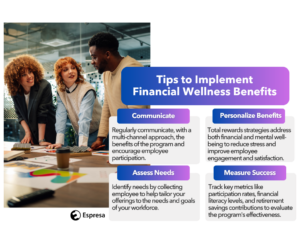
1. Assess employee needs
The key to meeting employee needs lies in understanding their unique experiences and aspirations. Empower employees by conducting surveys, focus groups, or one-to-one meetings to understand their specific financial concerns and goals. Utilize financial literacy screenings to gauge employees’ understanding of budgeting, saving, and investing strategies. The data collected will allow you to tailor your offerings to the needs and aspirations of your workforce.
2. Offer personalized benefits
A comprehensive total rewards strategy should address both financial and mental wellbeing. Financial stress often manifests as mental health challenges, so it’s crucial to offer emotional support for employees navigating stress and anxiety around finances. Lifestyle Spending Accounts (LSA) provide a uniquely flexible, personalized approach to benefits. Employees can spend their LSA funds on a wide range of eligible expenses based on their unique needs.
3. Communicate effectively
Routinely communicate the value of your financial wellbeing program and inspire employee participation. Utilize a multi-channel approach – internal communications, workshops, digital platforms, and personalized outreach – to ensure employees are aware of the program’s goals and motivated to engage. Offer incentives or rewards to recognize participation and celebrate financial wellbeing milestones.
4. Measure success
Tracking key metrics like participation rates, financial literacy levels, and retirement savings contributions measures your program’s success. PwC’s Employee Financial Wellness Survey revealed that organizations prioritizing financial wellness significantly enhance overall employee wellbeing. Flexible benefits programs empower employers to adapt offerings to meet evolving employee needs.
Level up your wellness benefits strategy
The long-term consequences of financial issues are strongly linked to stress, anxiety, poor health, unhealthy lifestyles, absenteeism, and reduced job effectiveness. Designing benefit plans to help employees manage their health and finances so they can remain engaged and productive at work should be a top priority for companies. Employees who are physically thriving, financially secure, emotionally balanced, and socially connected are more engaged and productive.
Financial wellness programs and lifestyle benefits demonstrate employers care about their employees beyond their responsibilities. LSAs serve as a cornerstone of a comprehensive benefits strategy designed to address the evolving needs of the workforce in dynamic economic conditions. Level up your benefits strategy to address the real-life challenges your people face and unlock the power and resilience of your workforce.
With the Espresa platform, HR delivers what your employees want and need. Ready to learn more about Espresa? Reach out to our team for a free demo!
Frequently Asked Questions
What is a financial wellness program for employees?
Financial wellness programs for employees are programs that include financial education, savings plans, and educational assistance. They are best administered through a Lifestyle Spending Account, adaptable to support employees regardless of their financial status or needs.
What are more financial wellness benefits employees may need?
Financial health looks different for every employee, which is why in addition to the common benefits above, there are additional benefits to consider, like:
- Financial Education and Guidance
- One-on-one financial coaching
- Debt Management Tools
- Emergency Savings Support
- Retirement Planning Guidance