







Lifestyle Spending Accounts (LSA) are the ultimate equalizer for a multinational company offering a single benefit to all employees globally, transcending local regulations.
Many employers assume LSAs are limited to post-tax dollars and therefore constitute an additional benefit. In reality, LSAs can encompass tax-advantaged perquisites you may already be funding, helping to enhance employee appreciation and drive engagement.
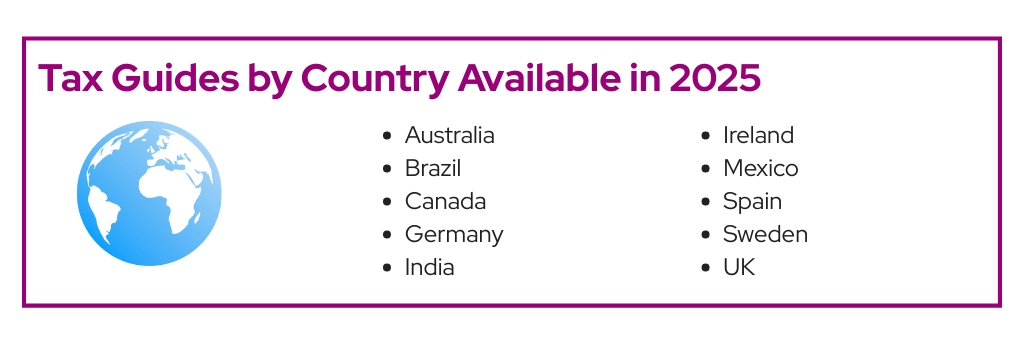
Espresa’s International Tax Guides, prepared by international tax experts, IBFD*, can help you understand the local environment and the tax implications of moving existing allowances and perquisites under the LSA umbrella. Please note that these resources are designed for informational purposes only and should not be used as a substitute for professional tax advice.
Here’s what we’ll cover:
- What’s in a Name: Flexible Spending Accounts Outside the U.S.
- Amplifying Your Global Total Rewards Strategy
- Country Insights: Local Tax Rules for LSA and FSA
- A Helpful Resource: Espresa’s International Tax Guides
What’s in a Name: Flexible Spending Accounts Outside the U.S.
Conversations with local HR teams about Lifestyle Spending Accounts can be challenging. Outside the U.S., the more familiar term is Flexible Spending Account (FSA), reflecting the wide applicability of notional accounts across a variety of benefits and perquisites.
Not to be confused with FSAs in the U.S., which are a distinct category altogether, as outlined in an earlier article (LSA vs. FSA in the U.S.).
There is no legislation outside the U.S. specific to FSAs. Rather, the legislation is applied to the underlying benefits covered by the notional wallet and the terms and conditions applied. In many cases, a benefit can be tax-advantaged if it meets certain conditions and cannot be surrendered for money.
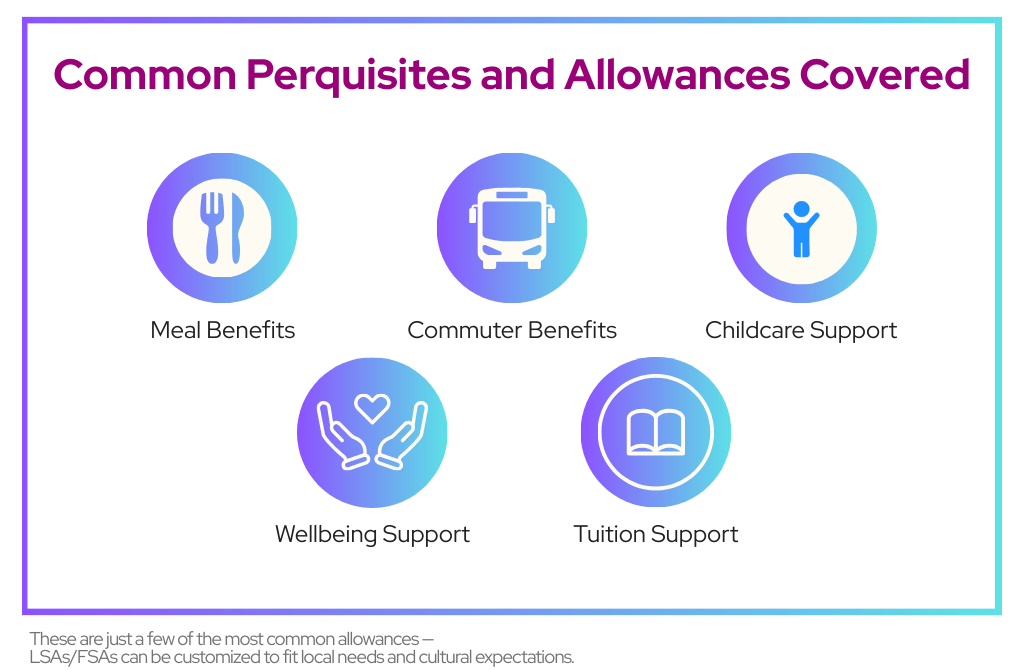
The strength of the LSA/FSA approach to benefits and perquisites for the multinational lies in its local adaptability within a global strategy. Plans can reflect local tax codes and cultural expectations while maintaining a consistent global framework.
Amplifying Your Global Total Rewards Strategy
Global HR and benefits teams often face a myriad of local allowances and perquisites provided to remain competitive in talent markets. These programs can be underappreciated, overly complex, and administratively burdensome.
By consolidating allowances and perquisites under an LSA or FSA framework, companies can:
- Increase employee engagement and perceived value
- Reduce administrative overhead
- Deliver cost savings by funding only what employees use
Understanding the tax implications ensures these benefits have maximum impact.
Country Insights: Local Tax Rules for LSA and FSA
The strength of the LSA/FSA approach to benefits and perquisites for the multinational lies in its local adaptability within a global strategy. Plans can reflect local tax codes and cultural expectations while maintaining a consistent global framework.
Examples:
-
- Singapore & Hong Kong: FSAs are an increasingly popular benefit to supplement the group medical plan. FSAs are often used to provide tax-advantaged outpatient, maternity, and dental benefits as well as health screenings. Childcare expenses are also often included and tax-exempt if the funds can only be spent at registered childcare centers. Many other lifestyle benefits are also included on a post-tax basis.
- Brazil: Meal benefits are tax-exempt if they cannot be exchanged for their equivalent dollar value. Providing the allowance through a notional FSA meets this requirement. Similarly with childcare, commuting benefits, and even some wellbeing benefits if the plan design meets certain requirements.
- Ireland: Commuting benefits such as rail passes and bicycles can be tax-exempt if certain requirements are met. These conditions can be carried into the FSA plan design. Ireland is particularly generous on health and wellbeing expenses, most of which are tax-exempt when provided through qualified practitioners.
- Canada: Employers can provide tax-exempt gift cards up to C$500 if they can only be spent at a specific retailer. Espresa’s marketplace could be deemed suitable in conjunction with an LSA/FSA approach.
- Germany: There is a specific tax-exempt provision of €50 per month covering a range of benefits-in-kind if provided to all employees. Germany also encourages the reduction of health risks and promotion of health with additional wellbeing provisions.
- India: Encourages employee vacations through a tax exemption available on employer-provided vacation funds once every two years.
A Helpful Resource: Espresa’s International Tax Guides
Beyond the tax implications, Espresa’s International Tax Guides help global HR leaders identify the likely allowances and perquisites already in place in local countries – and evaluate how they can be consolidated under an LSA/FSA framework. This alignment of global strategy with local expectations simplifies program delivery, reduces administrative complexity, and ensures benefits have maximum impact.
Flexible Spending Accounts (FSA) are more than just a multinational benefit; they’re a way to create equity, consistency, and engagement across your workforce. By consolidating local allowances and perquisites under a unified global model, organizations unlock cost savings, enhance employee appreciation, and deliver a benefit employees truly value.
Espresa’s International Tax Guides are designed to help you navigate country-specific rules and opportunities with confidence. If you’d like to access these resources, they are available exclusively through our team. Ready to explore how LSA/FSA can work in your countries? Connect with our consultant team to discuss the best approach.
*About IBFD: Founded in 1938 as the International Bureau of Fiscal Documentation, IBFD has developed into one of the most respected organizations studying and documenting international taxation systems and investment legislation. Today, the IBFD’s activities include research and provision of tax information, databases and publications, consultancy for governments and tax administrators, and training on international tax matters for the public and private sectors. As an independent, not-for-profit research foundation, the IBFD offers objective and unbiased information. For more information go to IBFD.org.