
GLP-1 and specialty drug costs are a growing pressure point for employers. Specialty Care Accounts offer a new way to fund high-cost care by capping employer exposure and restoring cost predictability. They support specialty drugs and services—including GLP-1s, HRT, and specialty mental health—while preserving employee access and choice.
See How Employers Are Containing GLP-1 Costs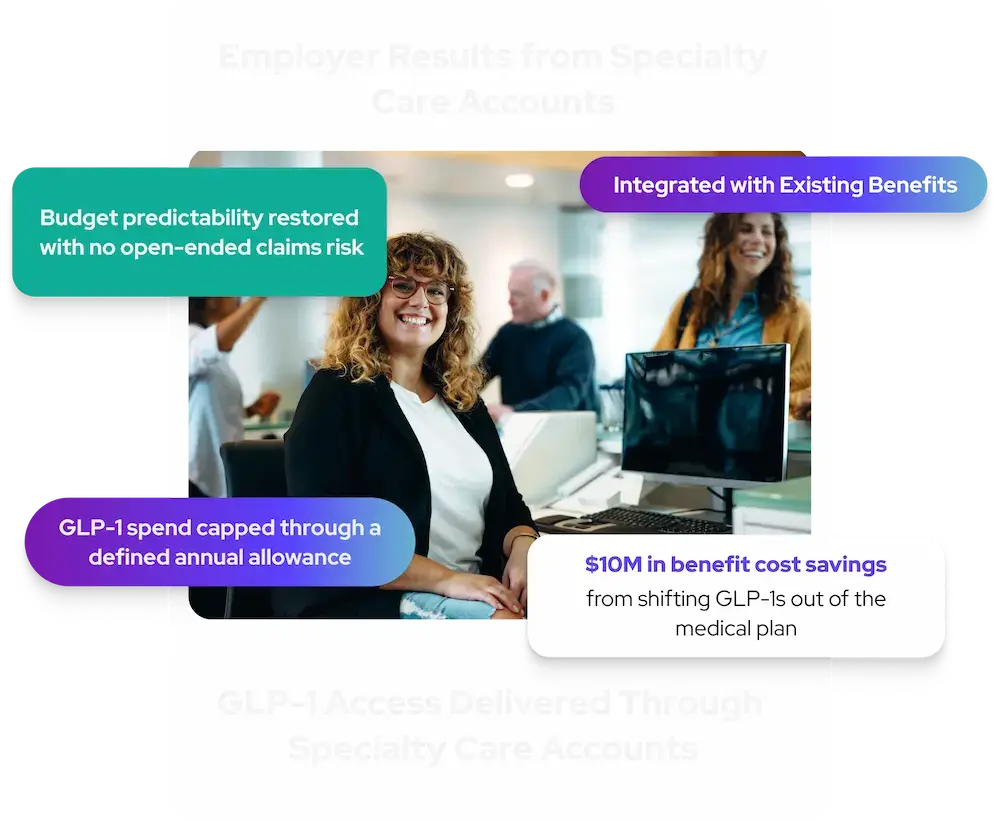

Employers covering GLP-1s today can significantly reduce spend by shifting from open-ended formulary coverage to a capped, employer-defined funding model

A sustainable option for employers not yet offering GLP-1s who want budget predictability without committing to open-ended costs

Funds can be used with eligible digital, retail, or in-person providers, including DTC options

The same structure can support additional high-cost specialty categories such as mental health, hormonal health, and out-of-pocket medical expenses

Adding these high-cost categories to medical plans creates major cost pressure and unsustainable renewal increases.

Demand for GLP-1s and specialty care is rising fast—placing unprecedented pressure on traditional benefit models.

High out-of-pocket costs lead 59% of employees to delay care, impacting health, satisfaction, and productivity.
Specialty Care Accounts are a healthcare cost containment strategy designed specifically for today’s most expensive benefit categories. Instead of open-ended claims, employers define a fixed annual allowance for specialty care, creating predictable healthcare spend while expanding access to care employees are actively seeking.
For employers already covering GLP-1s, this approach can significantly reduce spend. For those not yet offering coverage, it provides a sustainable way to respond to growing pressure without committing to open-ended costs.


Many employers are seeking ways to support hormone replacement therapy (HRT), menopause care, and other specialty treatments that fall outside traditional coverage. Specialty Care Accounts provide a compliant, flexible way to address these needs while maintaining benefit cost control.
Specialty Care Accounts give employers a scalable approach to healthcare cost containment–protecting budgets, expanding access, and future-proofing benefits strategies as specialty drug demand continues to grow.


Employers set a fixed annual specialty care budget and define eligible expenses

Employees use funds for eligible specialty drugs and services, including GLP-1s, HRT, and weight management

Programs work alongside existing health plans and Lifestyle Spending Accounts (LSA)

Employer healthcare spend remains capped, predictable, and transparent

Specialty drug demand is driving employer healthcare spend to its fastest pace in years. Specialty Care Accounts provide a scalable approach to cost containment—protecting budgets from GLP-1 renewal shock while expanding access to the care employees are actively seeking. Learn how to shift from open-ended formulary coverage to a predictable, capped model that future-proofs your benefits strategy.