







Belonging is a core component of any workplace. It influences how employees work, how they interact with their colleagues, and how they feel when they leave for the day. It’s not just a cultural ideal. It’s a business imperative that shapes performance, engagement, and retention. It’s a social contract, established from the very beginning, and when it is not respected, what incentive does an employee have to stay?
In the 1970s, Xerox presented their Employee Resource Group (ERG), the first known of its kind, in an effort to address the racial inequalities still felt in a post-Civil Rights Movement United States. The goal was clear: build a supportive, inclusive work environment where all employees are equipped to not only succeed, but thrive. Xerox’s Black Caucus was created in response, uplifting Black employees, reinforcing growing diversity goals, and confronting workplace challenges outright.
Xerox’s first employee resource group opened a new doorway for supportive employee experiences—with leadership noting that retention rates for employees in ERGs are nearly double the rate for non-participants.
Since the first ERG, sometimes called affinity groups, their scope has expanded far beyond their original intent. Today, ERGs span identity-based communities, shared interests, and professional development initiatives. From LGBTQ+ individuals and veterans, to birdwatchers and cancer support groups, ERGs have become an integral part of employee wellness and benefits administration.
In this article, we’ll cover what an employee resource group is, and why over the years, their purpose and scope has grown—facilitating employee wellness, employer goals, and company missions.
Here’s what we’ll cover:
- What are employee resource groups?
- Types of employee resource groups
- Why employers invest in ERGs
- How to start an employee resource group
- Employee resource group best practices
- Measuring ERG impact and ROI
- When ERGs may not be the right fit
- Employee resource groups: Key takeaways
What Are Employee Resource Groups?
So, what is an employee resource group? Employee Resource Groups (also called ERGs or employee affinity groups) are dedicated employee groups that empower employees to connect through shared identities, interests, and experiences—driving belonging, strengthening culture, and turning company values into lived employee experiences.
Supporting employee communities has been a winning business strategy since the 1970s with Xerox. Today, ERGs continue to evolve—expanding their role in shaping the modern employee experience.
For Xerox in the 1970s, their goal was to create a more equitable experience for their Black employees following the Civil Rights Movement. ERGs began in activism and mutual respect, and have continued to adapt to meet the needs of modern employees and employers. Now, Mckinsey’s data notes around 90% of organizations have ERGs, many still aimed at addressing diversity, equity, and inclusion challenges. Diversity, equity, and inclusion (DEI) initiatives are exceptionally important and will be forever tied to employee resource groups because of their trailblazing origins.
The impact of employee belonging is not to be underestimated. And at their core, employee resource groups are exactly that—a tool to support employee belonging. But this isn’t just a cultural initiative; it’s a strategic business imperative.
But they are more than an avenue for connection, they are a core component of a broader benefits ecosystem. While many organizations use ERGs as a catalyst for DEI support, that is not universally applicable. Leaders are also tying their ERGs to career growth, skill-building, and measurable improvements in employee sentiment.
New doors are open for ERGs, and for forward-thinking organizations, there is truly no limit to their creativity and applications. But there are a few common employee resource groups that have solidified their place for employees.
4 Common Types of Employee Resource Groups
Diversity is the greatest strength an ERG has. Each type of employee resource group has unique goals and success metrics. That diversity of choice creates a strong resource and space—not just for employees to connect and feel safe, but to drive measurable business outcomes and support a more inclusive employee benefits strategy.
Here are a few employee resource group examples that future-forward organizations are prioritizing:
1. Diversity and Inclusion ERGs
The most common employee resource groups are centered around employee identity. Groups created with a deliberate effort to connect and uplift the participants, typically in minority or historically marginalized people. Common groups include:
- Veteran
- LGBTQ+
- BIPOC
- Women
- And more
More than anything, this category of employee resource group encourages belonging for diverse individuals. Salesforce, for example, has a diverse list of employee “equality groups.”
2. Professional Development Groups
Professional development ERGs, sometimes called business resource groups, connect employees with one another and industry leaders to create opportunities for career growth. In these groups, employees typically have a set budget they can use to facilitate workshops, invite speakers, or lead thought leadership discussions.

3. Parenting/Caregiving Groups
Parenting and caregiving are two of the hardest jobs in the world, and for 6.3 million U.S. adults, it’s their work after work. Parenting and caregiving groups masterfully combine common employee needs with connection, sourcing advice, insights, and recommendations from other employees while commiserating with them and providing resources.
4. Social/Interest Groups
Social groups, or employee affinity groups, create community ERGs based on personal interest or hobbies. These are incredibly common in tandem with DEI-based ERGs, creating a dual system for employees to share personal experiences and hobbies. Social interest groups can cast the widest net, encompassing anything that employees find interesting or valuable to share. A few examples include:
- Hiking/Outdoor
- Gardening
- Birdwatching
- Young Professionals
- Fitness
- Wellbeing
- And more
While mental health and wellbeing are not necessarily a “social” group, they are equally vital for employees. The National Alliance on Mental Illness even published a report on how mental health-related ERGs are rising, in both effectiveness and frequency—a strong resource for employers with burnt-out teams.
Why Employers Invest in ERGs
The impact of employee belonging is not to be underestimated. And at their core, employee resource groups are exactly that—a tool to support employee belonging. But this isn’t just a cultural initiative; it’s a strategic business imperative.
In a report from BetterUp, they conclude that when workers feel like they belong, it directly impacts their performance and retention. When properly supported, they saw:
- 56% increase in job performance
- 50% reduction in turnover risk
- 75% decrease in sick days

Read More: The True Cost of Employee Turnover
That’s why 90% of Fortune 500 companies invest in employee resource groups. They know it informs a larger total rewards strategy, and that employee resource group benefits outweigh the typically low financial investment. With a strong partner, it can combine other offerings to consolidate all solutions on a single platform, further enhancing the experience for administration teams and, importantly, employees.
Why it matters for Employees
ERG programs and employee engagement are inherently tied to a company’s total rewards strategy. Without employee communities or other lifestyle benefits like Rewards and Recognition programs, employees may feel undervalued and underrepresented in their benefits programs.
Employees want to feel valued, and research continues to show that employee resource groups are directly tied with talent development and retention in the workplace.
Read More: Most Popular Modern Employee Benefits
How to Start an Employee Resource Group
An employee resource group is more than a collection of like-minded individuals, it’s a structured system of support that must reflect the diversity and needs of your workforce.
When determining how to start an employee resource group, there are several key considerations to ensure your ERG strategy is clearly defined and aligned to your employee population. Every successful program starts by understanding employee demand.
Measuring employee interest
An employee resource group is only as strong as its members, which means it must solve a real need. Send questionnaires, surveys, or ask them to conduct their own research on ERGs and if it would help their day-to-day wellness. By gauging early interest and launching with a clear employee resource group policy, organizations can drive early engagement and create momentum through word-of-mouth adoption.

Securing executive buy-in
Forward-thinking leaders know the value of a total rewards strategy and its influence over employee wellbeing. ERGs are more popular now than ever, because they deliver measurable impact.
They secure a powerful Value on Investment (VOI)—enhancing employee belonging and engagement. McKinsey’s research backs this up, noting that employees who feel included in their organizations are around three times more likely than their colleagues to feel passionate about the company. To secure executive buy-in, HR leaders must understand both the benefits of success, and the cost of inaction.
Draft a charter and define ERG governance
Company ERGs are as diverse and configurable as employers need them, but because of that, it is vital to answer the burning questions and align on program scope.
- Why does the business need an ERG?
- What determines a successful ERG program for our organization?
- What budgets should we allot to each group?
- What is NOT included in your program?
- Addressing the “not-included” can limit confusion and avoid duplicative questions from employees
Once the key questions are answered, employers must define the ERG program’s governance. Assigning channel administrators, event-related budgets, and which groups to include are strong first steps, ensuring that the program is tightly aligned with organizational goals.

Setting expectations and promotion
The more educated employees are on their benefits, the more likely they are to engage. Business Group on Health’s research suggests that when benefits and wellbeing experiences are disjointed, it can lead to poorer health outcomes, as employees stress about where their resources are. Launching the program should start at least three months before the program actually goes live.
In those months, set expectations for employees while also generating interest. Show employees practical applications and ensure they know the value and breadth of their new program. Send 90-, 60-, and 30-day updates!
Regular updates can encourage early employee buy-in while reinforcing the program with incentives and event speakers can garner new interest. At the core of promotion is inclusion. Even those without the specific qualifications should be able to join another group as an ally—encouraging more connection, learning, and belonging.
Integrating with existing benefits/HRIS
Each HRIS is different, but unifying benefits is essential for employee adoption. HR leaders can integrate their employee resource groups into other existing benefits, and Espresa’s platform specifically, is able to host links that seamlessly connect to other benefits, vendors, or company resources. That way, employees have access to all of their benefits, and the tools to use them, within a single vendor.
Employee Resource Group Best Practices
Employee resource group best practices are born from support for diversity, equity, and inclusion initiatives. Once ERGs are launched, maintaining momentum becomes critical to long-term success.
Something as simple as regular programming, like a monthly or quarterly speaker, can reinvigorate programs and give employees a reason to get involved. As participation grows, invite employees to shape programming and contribute new employee resource group ideas.
Encourage employees of all backgrounds to join other groups as an ally and learn more about others. This inclusion breaks down early barriers and uplifts these groups—reinforcing them as learning opportunities while not excluding anyone who wants to join. ERG best practices must also acknowledge and appreciate the effort of ERG leaders.

Some organizations choose to compensate leaders or incentivize organizing events with PTO or rewards points. Even a gesture from a Rewards and Recognition program to an ERG leader has marked improvements on engagement and early adoption.
Common avoidable ERG mistakes
Employee resource groups are great tools for organizational growth, but success requires more than simply launching a program.
Most issues arise when employers under-resource their groups or don’t allocate appropriate time for it, forcing employees to adapt, run their own events and incur expenses, or simply leave the group. Frequent events, a pre-established budget, and an attitude of inclusion will support ERG growth and participation.
But sometimes, it’s important to troubleshoot and acknowledge where an ERG might not fit.
When ERGs May Not Be the Right Fit
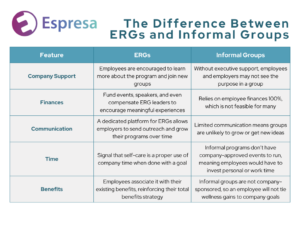
An inclusive employee benefits strategy also considers when a solution is not working. Employer ERGs can be difficult to manage when under small teams, as they quickly run the risk of becoming unpaid labor for the ERG administrators. With small teams, attendance and interest may be hard to gather, especially if employers are not prioritizing the wellness of their ERG leaders.
Additionally, an ERG is not a direct replacement for a comprehensive DEI strategy, it is a component of a wider and more meaningful total rewards system. Don’t let a single ERG define your diversity initiatives, and continue reaching out to groups and advocates to adapt the program.
Measuring ERG Impact and ROI
Employee lifestyle benefits continue to grow and expand—forming more holistic employee experiences and prioritizing more than just an employee’s salary when considering wellbeing. Employee engagement is among the most valuable metrics for a successful organization, and employee resource groups are a stepping stone. But how do they actually perform in a real company?
With Espresa, employers have the tools to track employee participation rates, retention impacts, engagement scores, and more—utilizing real employee data to adapt programs and realign goals. Data is the backbone of a successful ERG strategy, noting which groups may need greater support, more resources, or leadership action.
Key Takeaways and why ERGs are sticking around
Employee resource groups are a tool—a tool with emotions, feelings, and needs. They must be embedded into company culture, otherwise, they risk becoming a performative initiative.
To avoid these pitfalls and create a workplace that attracts all talent, employers must embody the values of their ERGs–aligning culture, values, and business goals into a single employee experience.
ERGs with Espresa drive an especially adaptable program, capable of on-the-fly adaptations, data-driven management, and simple accessibility. With a low administrative burden for HR leaders, cost-effective management for CFOs, and a sense of community for employees, ERGs are foundational to employee wellness, and as a result, your bottom line.